

When should we come to the Wunschbaby Institut?
The wish for a child is one of the most intimate and personal concerns many couples share. It is completely normal for uncertainty and questions to arise when pregnancy does not occur over several months.
Questions many couples ask themselves.
- How quickly do people actually become pregnant?
- From what age should I be concerned if I am not getting pregnant?
- How long should we try to conceive naturally?
- And when does it make sense to book an appointment with a fertility specialist?
Perhaps you are wondering how long it usually takes to become pregnant, or at what point it is advisable to seek professional support from our fertility institute.

Every body is unique.
First of all: take a deep breath. Every person, every body is unique. For some couples it happens quickly, others need a little longer – that is normal. But if there is no success after six to at most twelve months without contraception, we recommend booking a free orientation consultation with our fertility specialists. For couples aged 35 and over, we recommend taking this step after just 6 months, as the ovarian reserve declines sharply with advancing age and the likelihood of a natural pregnancy decreases – even if you feel young and fit.


It is okay to ask for help.
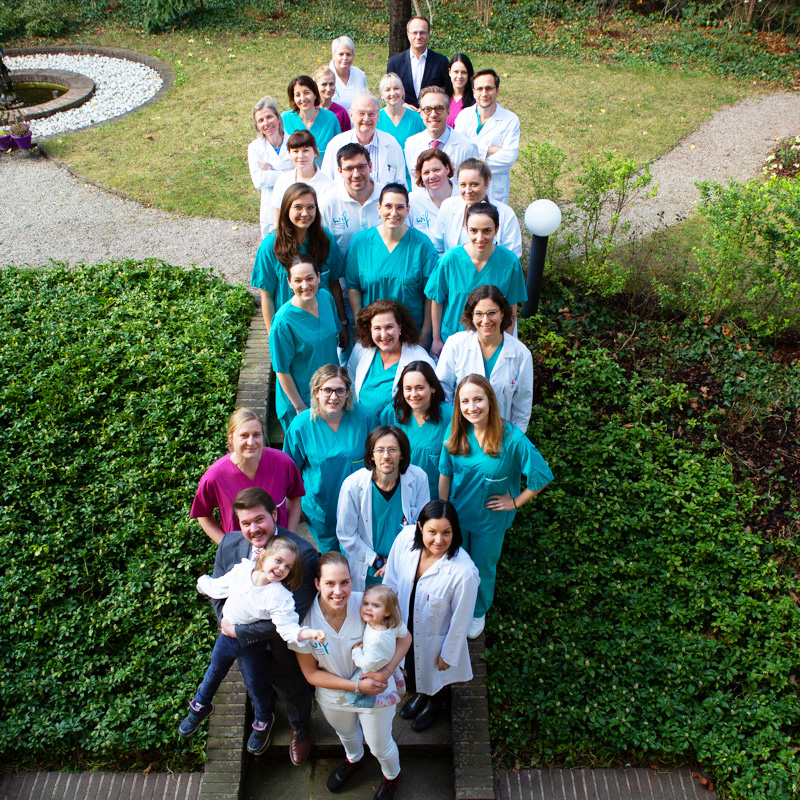
There is no reason for shame. Infertility affects far more people than you might think. The wish for a child is natural, and the desire to do everything possible to fulfil that wish is entirely legitimate. You are not alone on this journey, and we are here to support you. In the 40-year history of the Wunschbaby Institut, we have accompanied more than 30,000 couples on the way to fulfilling their wish for a child.



First steps when getting pregnant is not working.
You don't have to think of IVF straight away. The journey usually starts much more simply – with knowledge of your own cycle and a gentle, well-planned work-up.
Understanding your own cycle
Many couples lose months because the timing is not quite right. Get to know your fertile days – basal body temperature, cycle apps or ovulation tests can help. You will find the basics and practical tips in our guide Getting pregnant.
Basic check with your gynaecologist
A gynaecological check-up clarifies the essentials: cycle, thyroid, vaccination status and general health. For the partner, a semen analysis is a simple and revealing first step.
Attending a free info evening
Non-binding and free of charge: at our fertility info evenings in Vienna, Baden and St. Pölten you get to know our team, learn which paths exist and can ask all your questions.
First consultation at the fertility institute
A whole hour just for you: a detailed medical history, a gynaecological examination with ultrasound, an honest assessment of your situation and a clear plan for the next steps.
Targeted work-up – and a plan
Hormone status in our own hormone laboratory, ultrasound, semen analysis and, where needed, genetic tests: this is how we find the cause – and, together, the path that suits you.
Gynaecologist or fertility institute – who does what?
Your gynaecologist
The gynaecological practice is the first port of call: this is where cycle and general health are checked, baseline values are taken and obvious causes are ruled out. Many gynaecologists accompany the first months of trying for a baby and make a targeted referral when a more in-depth work-up makes sense.
Our fertility institute
At the fertility institute, diagnostics go deeper: specialised hormone analyses in our own laboratory, high-resolution ultrasound, semen analysis and, where needed, genetic testing – all under one roof. On this basis, your individual treatment plan is created, from cycle monitoring to IVF or ICSI. Gynaecologist and institute work hand in hand.
Free info evenings and an individual first consultation.
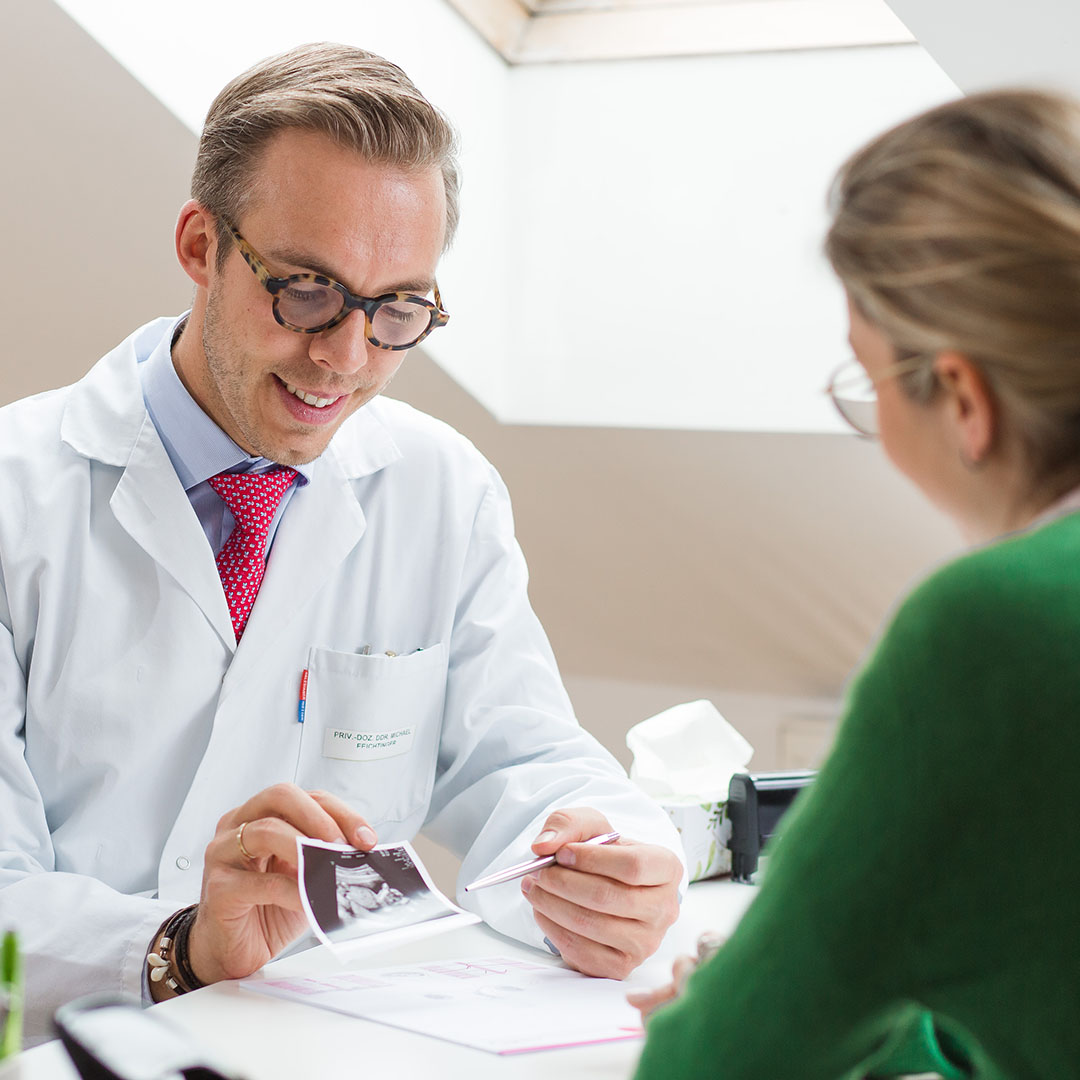
We warmly invite you to our free info evenings. There you can ask all your questions, map out your personal fertility roadmap and get to know our specialists in person. During the in-depth first fertility consultation we take time for you, perform an ultrasound and, if needed, initiate further tests and examinations.

Don’t stay inactive.
Inactivity can lead to further uncertainty and anxiety – and don’t lose sight of the time factor either. We encourage you to take the first step; we will take all the others together! Because the worst thing you can do is nothing. Every day you take action brings you one step closer to your longed-for child.
We are here for you.
It is our passion and our daily commitment to help couples on their journey to a fulfilled wish for a child. Trust in our expertise and let us walk this path together.
Not getting pregnant – your questions, our answers.
How long does it normally take to become pregnant?
That varies greatly from person to person. Many couples become pregnant within the first year – for some it works within the first few cycles, others need longer without anything being wrong. Age, cycle and the right timing are among the decisive factors. You will find the basics in our guide Getting pregnant.
When should we seek help?
As a rule of thumb: after twelve months of regular unprotected intercourse without pregnancy. If the woman is 35 or older, we recommend a work-up after just six months, because the ovarian reserve declines noticeably with age. With known diagnoses such as endometriosis or PMOS (formerly PCOS), an earlier appointment makes sense.
Should we see a gynaecologist first or go straight to the fertility institute?
Both are right: the gynaecological practice takes care of the basic check, the fertility institute of the specialised diagnostics and treatment. You do not need a referral for a first consultation with us – especially from 35 onwards, it pays not to wait too long.
Which examinations come first?
For the woman, usually hormone status, ultrasound and cycle observation; for the man, a semen analysis. These examinations involve little strain and often already point in a clear direction. If needed, further examinations follow, for example of the fallopian tubes or a genetic work-up in our own laboratory.
What happens at a free info evening?
You get to know our team and our institutes, learn how work-up and treatment proceed, and can ask all your questions – non-binding and free of charge. You will find the current dates in Vienna, Baden and St. Pölten under Free fertility info evenings.
Does the man's age also play a role?
Yes, although less strongly than the woman's. Sperm quality, too, can change with age and through lifestyle factors. A semen analysis is a simple, quick test and is therefore part of every fertility work-up.
Can we do anything ourselves while we keep trying?
Yes: a healthy lifestyle, giving up nicotine, a balanced diet and knowing your fertile days improve the starting position – for both partners. Just don't lose sight of time in the process: if it takes longer, an early work-up brings clarity and often saves months of uncertainty.
Take the first step – we will take the rest with you.
Attend a free info evening or book your first consultation right away.
Or call us: +43 1 877 77 75