

IVF – simply explained.
In vitro fertilisation (IVF) is a medical method for achieving a pregnancy – even when it does not work the natural way. This page explains simply and clearly how IVF works, who needs it and what happens during treatment.
What is IVF?
IVF is an abbreviation. It stands for in vitro fertilisation.
That is a difficult term. It means:
A pregnancy does not begin in the body, but first in the laboratory.
IVF helps people who want a child but cannot get pregnant the natural way.
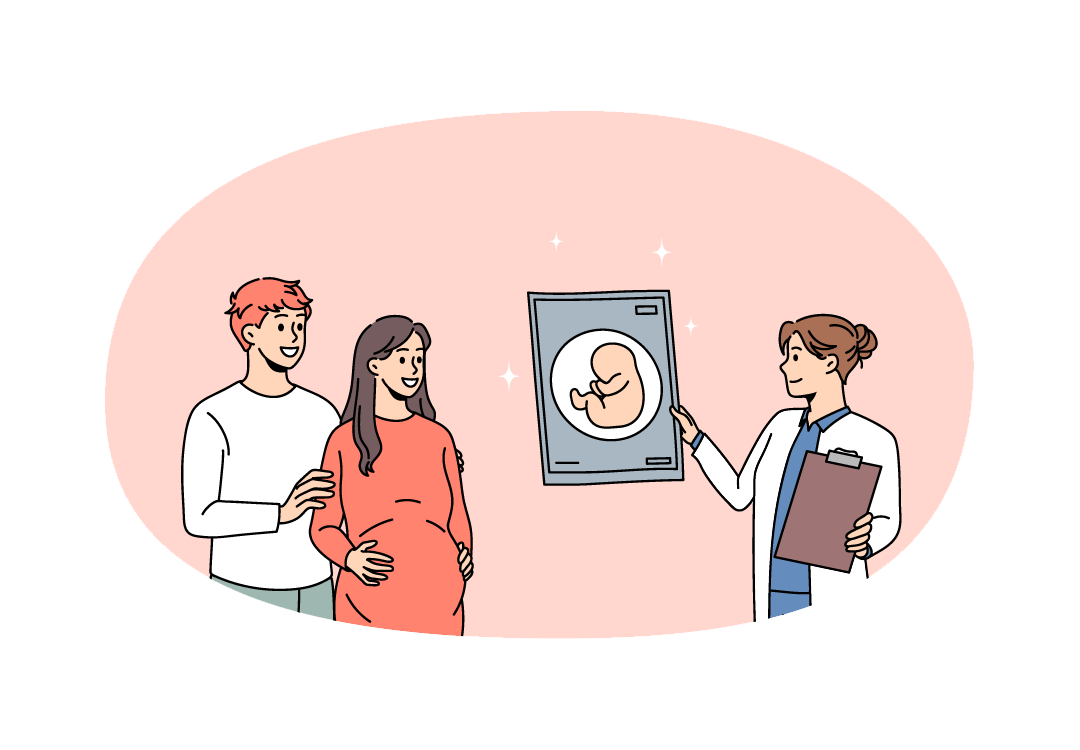

Who needs IVF?
Some people have difficulty having a baby. There are many reasons for this:
- The woman has problems with her fallopian tubes. (The fallopian tubes are like small tubes between the ovaries and the uterus.)
- The man has very few sperm or sperm that cannot move. (Sperm are the male reproductive cells.)
- A lot has already been tried, but it has not worked so far.
- Two women or a single woman would like to have a child. (In some countries this is allowed, in others it is not.)
- Two men would like to have a child with the help of a surrogate mother. (In some countries this is allowed, in others it is not.)
The four steps of IVF.
Helping the woman's eggs grow
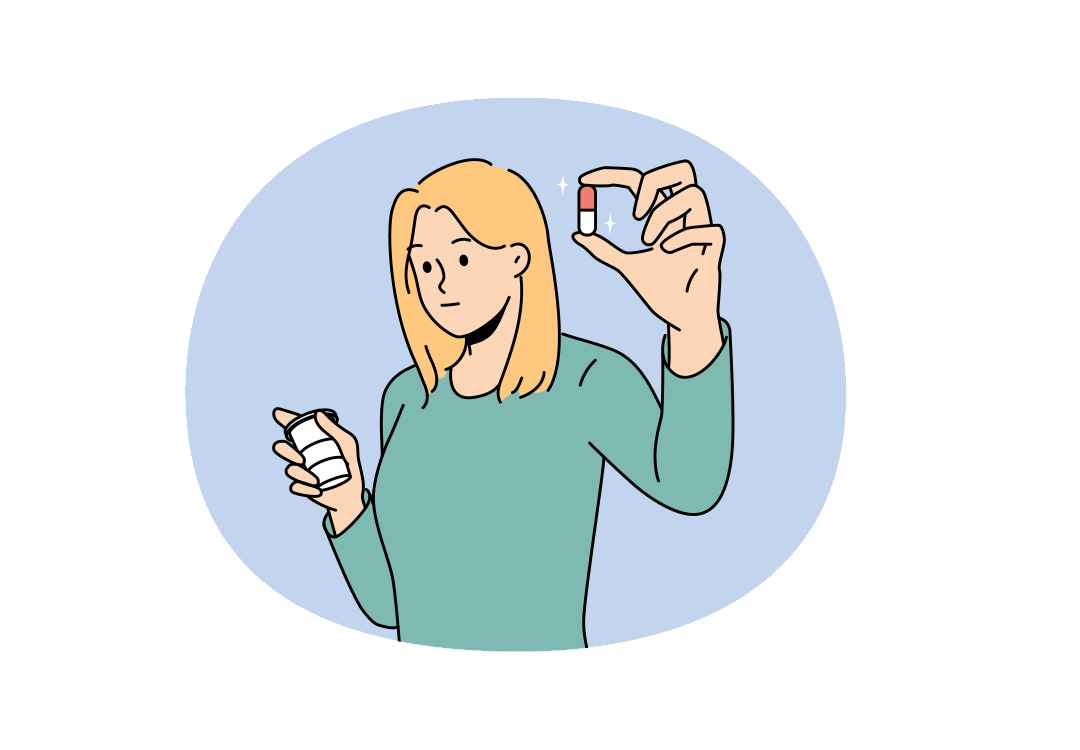
The woman receives medication (hormones). This helps the body grow several eggs at the same time.
Normally, only one egg matures per month. With the medication, several grow.
Retrieving the eggs
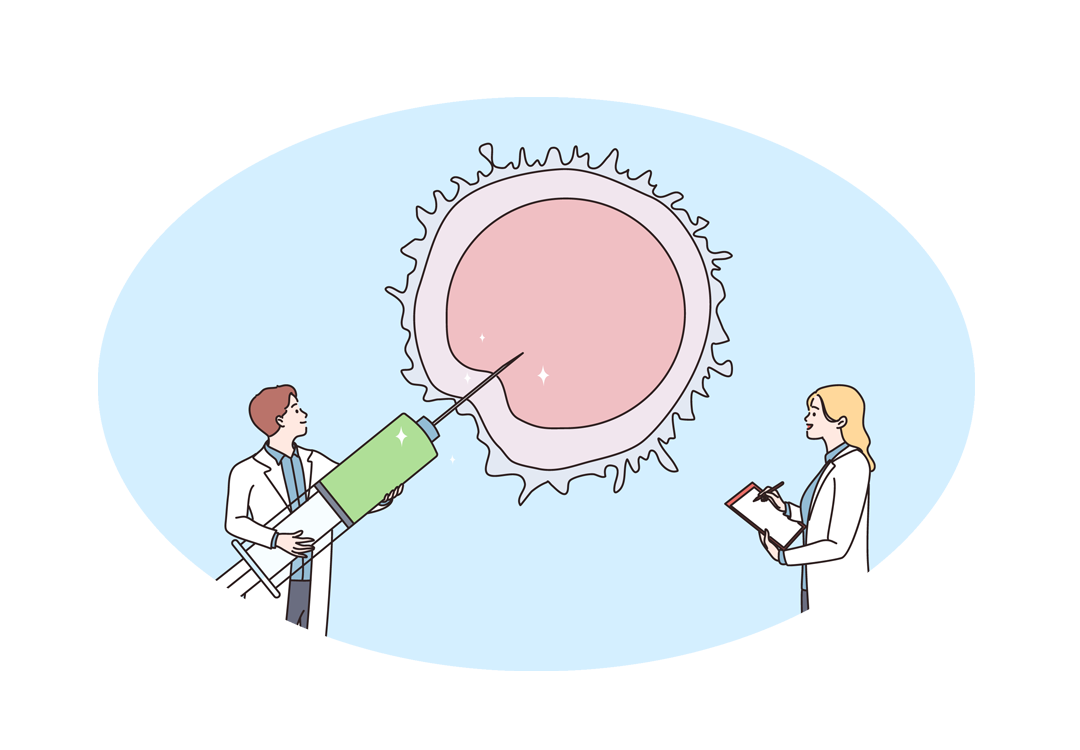
When the eggs are mature, they are taken out of the body.
The doctor does this with a small needle.
The woman is given an anaesthetic so that she feels nothing.
Fertilisation in the laboratory
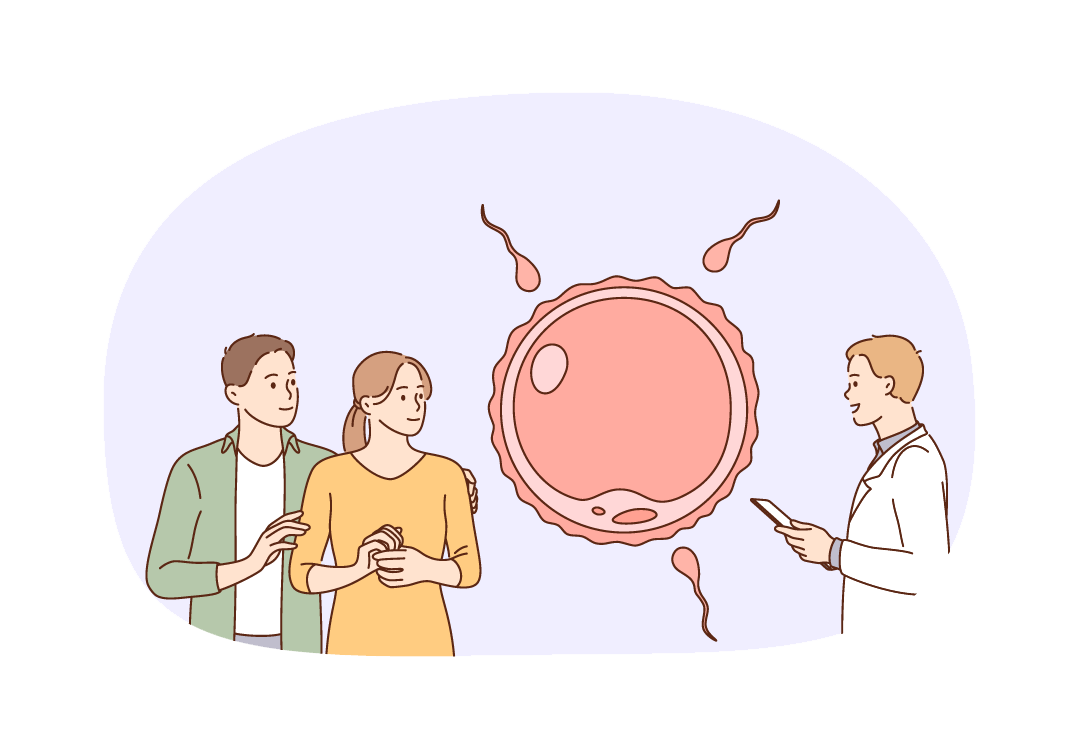
The eggs are mixed with sperm in the laboratory.
The sperm can come from the partner – or from a donor.
Some eggs are then fertilised. This means: egg + sperm together become an embryo.
An embryo is the very first beginning of a baby.

Placing the embryo in the uterus
An embryo is now carefully placed in the woman's uterus.
There it can implant.
If this works well, a pregnancy begins. The woman is then pregnant.
What happens after the transfer?
After the transfer, it is time to wait.
After about 2 weeks, the woman takes a pregnancy test.
If the test is positive: congratulations!
If not, you can try again.


Important facts
- IVF is a safe medical procedure.
- Sometimes it works the first time. Sometimes it takes several attempts.
- The woman and her partner are well looked after.
- There is psychological help if someone has worries or fears.
- Sometimes health insurance can cover the costs. This depends on the country and the situation.
How long does an IVF take?
About as long as one month
An IVF treatment usually takes about 3 to 4 weeks.
That is about as long as one cycle.
A cycle is the time from one period to the next.
It goes like this:
- About 2 weeks: medication for the eggs.
- 1 day: the eggs are retrieved.
- 2 to 5 days: the eggs are in the laboratory.
- 1 day: the embryo is placed in the uterus.
- About 2 weeks: wait and then test.
How often do I have to come in?
You do not have to come to us every day.
Usually you come only a few times for a short check-up.
We then look at the eggs with ultrasound.
That takes only a few minutes and does not hurt.
You can take the medication at home.
We show you exactly how it works.
Your partner may help you with it.
How your first visit works.
You do not need to prepare anything. You can simply call us.
You get in touch with us
You call us. Or you write to us via the contact form.
We then arrange an appointment with you.
You can also come to a free info evening first. There we explain everything. You do not have to decide anything there yet.
The first conversation
We listen to you.
You tell us what has happened so far.
We explain what we can do.
You may ask any question. Even questions that feel embarrassing. For us they are normal.
You may bring someone with you.
The examinations
We look for the reason why it has not worked so far.
For the woman: a blood test and an ultrasound.
For the man: a test of the sperm. This is called a semen analysis.
We have our own laboratory in the building. So you do not have to travel anywhere else.
The plan
We tell you which treatment fits you best.
Sometimes that is an IVF.
Sometimes something smaller is enough, for example an insemination.
You decide. We do not push you.
The start
When you are ready, we begin.
You get a plan with all your appointments.
You also get a phone number.
You can call it whenever you are unsure.
Important words – simply explained.
At a fertility centre you hear many difficult words. Here are the most important ones.
About the body
- Egg: the woman's cell. A baby can grow from it.
- Sperm: the man's reproductive cell.
- Ovary: this is where the eggs grow.
- Fallopian tubes: small tubes. They connect the ovary and the uterus.
- Uterus: this is where the baby grows.
About the treatment
- Hormones: medication. It helps the eggs grow.
- Ultrasound: a picture of the belly. It does not hurt.
- Anaesthetic: you sleep for a short time. You feel nothing.
- Laboratory: a room with microscopes. Specialists work there.
- Transfer: the embryo is placed in the uterus.
Names of methods
- IVF: an egg and many sperm come together in the laboratory.
- ICSI: a single sperm is placed into the egg.
- Insemination: the sperm is placed into the uterus.
- Embryo: the very first beginning of a baby.
- Implantation: the embryo stays in the uterus.
Two questions many people ask.
What is the difference between IVF and ICSI?
What can I do myself?
You can do something. But you are not to blame if it does not work.
- Do not smoke. This is important for women and for men.
- Drink little or no alcohol.
- Move your body normally. A walk is good.
- Get enough sleep.
- Talk about your worries. With your partner. Or with us.
You can find more tips on the page getting pregnant.
Wunschbaby is by your side
At Wunschbaby we care for all people – with or without a disability.
We explain everything in detail.
You may ask any question.
We take time for you.
Our wish: that your greatest wish – a baby – becomes reality.

Frequently asked questions about IVF – simply answered.
Does an IVF hurt?
Most of it does not hurt.
You hardly feel the ultrasound examinations.
When the eggs are retrieved, you get sleeping medicine and pain medicine. You feel nothing.
Placing the embryo takes only a few minutes and almost never hurts.
The hormone injections are very small and go under the skin.
How long does an IVF take?
Usually about 3 to 4 weeks.
First you take medication for about 2 weeks.
Then the eggs are retrieved.
A few days later, the embryo is placed in the uterus.
After that you wait about 2 weeks until the test.
Do I have to stay in hospital during this time?
No. You come to us only for short appointments.
On the day of the egg retrieval you stay with us for about 1 to 2 hours. Then you may go home.
You should not drive a car yourself on that day, because you have been given sleeping medicine.
Does an IVF work the first time?
Sometimes yes. Sometimes it takes several attempts.
That is normal and not a mistake on your part.
How good the chance is depends mainly on the age of the woman. Health also plays a role.
We tell you honestly what is possible in your situation.
What happens if the test is negative?
That is very sad. You are allowed to be sad.
We then talk with you about the next step.
Maybe there are still frozen embryos. Then you can try with those.
Maybe we also change something in the plan.
You can also take a break. That is allowed.
Who pays for the IVF?
In Austria there is the IVF Fund.
The fund can cover part of the costs.
For this, certain conditions must be met. For example, your age and the reason for the treatment.
We have a contract with the IVF Fund. We check with you whether it is possible in your case. And we tell you beforehand what to expect.
Will I get help if I am afraid?
Yes. Fear and worries are part of it.
With us, you can talk to a psychologist.
You may also ask at every appointment if you have not understood something.
We then explain it again. Even several times. That is no problem.
Where can I come to see you?
We have three locations: in Vienna, in Baden and in St. Pölten.
You can choose the place that suits you best.
All treatments and all examinations are available in our own buildings.
You can find all addresses and phone numbers on the contact page.
We fulfil your wish for a child!
Ask us your questions – we take time for you.
Or call us: +43 1 877 77 75